What counts as a wall pass?
Touches looks for a ball leaving the player area, rebounding at the wall or board, and returning to the player for control or another kick. That whole cycle is one completed pass. A stationary ball, an outbound kick with no observed return, or movement unrelated to a rebound should not create a completed pass.
Here, wall passing means solo passing against a physical surface. It does not mean a give-and-go with a teammate.
Frame the passing lane in landscape
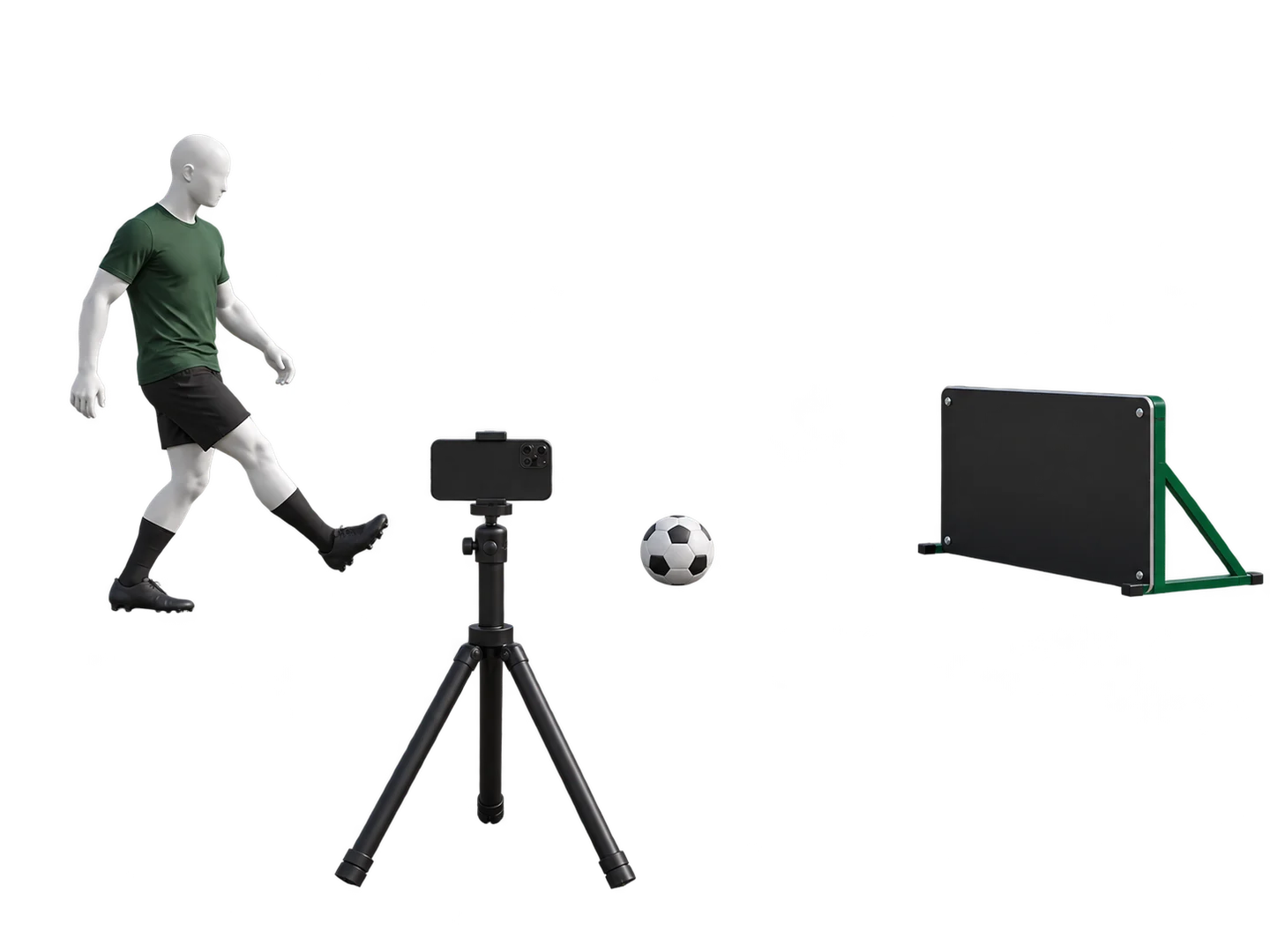
Mount the phone sideways, with the front camera toward your lower legs and the route to the rebound surface. Position it beside the route, not behind the board or where the ball can hit it. The ball should travel mostly across the screen.
Keep your lower legs, the turnaround at the board, and the return visible. Your head and shoulders can be outside the picture. More distance is useful only when it improves framing; it is not a reason to make the drill unnecessarily difficult.
Practice with a wall or rebound board
Choose a suitable surface and an open area where a loose ball will not damage anything. A rebound board should be secured according to its manufacturer’s instructions. A clean return is easier to interpret when the ball rolls predictably.
Start with a controlled pass. Receive the rebound, settle it, then pass again. This establishes whether the route is visible before you increase the pace or move laterally.
Controlled passes and one-touch passing
For controlled passing, the app can use the arrival and your next departure to understand the cycle. One-touch passing has less separation: the returning ball changes direction immediately. The counter needs to preserve evidence for the completed return while following the new outbound pass.
The app counts both patterns. Rapid one-touch passing is the hardest to count, so check it on your own drills before relying on the number. A continuously green ball does not guarantee uninterrupted evidence for every rebound.
What can cause a missed pass?
The board can hide the ball briefly; your leg can cover a contact; blur can weaken a detection; or the route can appear too small in the frame. The app may also reject a movement that does not clearly establish the expected cycle.
If the count stays still, check that the session timer is running, open the attention indicator, and try a few controlled returns. Changing the framing should serve visibility rather than a fixed percentage of the screen. The illustrated setup guide shows the side view.
Use the count alongside technique
A completed pass count measures cycles, not pass quality. Notice whether your rebound is manageable, your first touch stays nearby and you can use both feet. A lower count with deliberate technique can be more useful than rushed repetitions.
Try the wall passing drills for controlled returns, alternating feet and a gradual one-touch progression. These drills complement work with teammates and opponents.
Count your touches with Touches for iPhone.
Juggling and wall pass counting, personal bests and practice streaks.